China on Wednesday said the latest round of the border talks with India was held in a "candid and pragmatic atmosphere" and the two sides had a "positive, constructive and in-depth discussion" on the resolution of the remaining issues along the Line of Actual Control in the Western Sector.

The commander said the situation in the region has been stable and no major "changes or palpable shift of stance has been noted" even as the Indian and Chinese troops are engaged in a stand-off in Demchok and Depsang in eastern Ladakh.
India on Friday said the onus is on China to address the remaining unresolved issues relating to the eastern Ladakh row and that peace and tranquillity along the frontier were key for the restoration of normal relations between the two sides.
The two sides have already held seven rounds of Corps Commanders level talks to discuss the entire issue of transgressions in the Eastern Ladakh sector.
The talks till now have resulted in the resolution of issues in North and South Bank of Pangong Tso, Galwan and Gogra Hot Spring areas.

The government has adopted a multi-pronged approach involving the Army, the Indian Air Force and the Navy as well as diplomacy and economic measures to send out a firm and clear message to China that its misadventure in eastern Ladakh was not acceptable at all.

"All temporary structures and other allied infrastructure created in the area by both sides have been dismantled and mutually verified. The landform in the area has been restored by both sides to the pre-standoff period," the Army said in a statement.
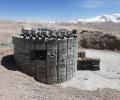
The government on Tuesday decided to set up a committee of secretaries to fast-track implementation of infrastructure projects along the border with China.
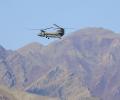
As soon as one lands at the Leh airfield, one can see the Indian Air Force C-17s, Ilyushin-76s, and C-130J Super Hercules aircraft flying in with rations and supplies for the troops deployed on the forward locations opposite the Chinese forces.

China has not yet talked about the number of casualties suffered by the People's Liberation Army during the clash.

The navy has significantly expanded its deployment in the Indian Ocean Region deploying a plethora of warships and submarines to create pressure points on China as the maritime space around the Malacca Strait is very critical for its supply chain through sea routes.
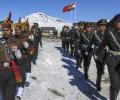
The decision to disengage the forces, locked in a bitter standoff for the last six weeks in eastern Ladakh, was taken at a nearly 11-hour-long meeting between senior Indian and Chinese commanders in Moldo on the Chinese side of the Line of Actual Control (LAC) on Monday.

General Zhao Zongqi is well known in India for having commanded the Chinese troops during the Dokalam episode. Zhao knows every inch and corner of the Indian border, at least the Eastern and Central sectors, including the Naku La area which witnessed fist-fights between Indian and Chinese troops in April/May. Claude Arpi introduces us to the PLA generals masterminding the Chinese aggression in Ladakh.

The Chinese military on Friday confirmed that the troops of China and India have begun the process of disengagement from the Patrolling Point 15 in the Gogra-Hotsprings area of eastern Ladakh in a 'coordinated and planned way'.

"The contents of video being circulated are not authenticated. Attempt to link it with the situation on the Northern borders is mala fide," the army said in a statement. It said differences between the two sides are being addressed through interaction between military commanders following established protocols on management of border between the two countries.
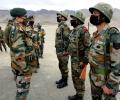
India, China have agreed to hold another round of talks soon.
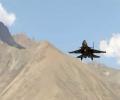
The Indian Air Force will carry out a mega exercise covering the Northeastern region early next month to check its combat readiness, amid a fresh spike in tension with China along the Line of Actual Control in Arunachal Pradesh.
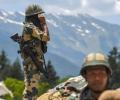
The action against Zakir Hussain, a councillor from Shakar constituency in Kargil district, followed registration of a first information report against him by police on Friday even as the councillor submitted a public apology over his remarks, the officials said.

In an address at a virtual seminar, General Rawat said the situation along the Line of Actual Control in eastern Ladakh remained tense and that India's posturing has been "unambiguous".

In Geneva, Bagchi would succeed Indra Mani Pandey who is set to return to New Delhi.

It is learnt that the face-off took place after a Chinese patrol tried to enter Indian territory and the troops of China's People's Liberation Army were forced back.

In his meeting with Prime Minister Narendra Modi on the sidelines of the 16th BRICS Summit in the Russian city of Kazan, Xi said that China-India relations are essentially a question of how the two large developing countries and neighbours, each with a 1.4-billion-strong population, treat each other, it added.
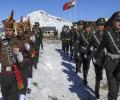
Sources said the process of disengagement along the Line of Actual Control is "complex", and in such a context, speculative and unsubstantiated reports need to be avoided.
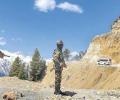
This is the third round of Corps Commander-level talks being held. The first two rounds had taken place in Moldo on the Chinese side of the LAC.

The Jaishankar-Wang talks came amid the dragging border row in eastern Ladakh that entered its fifth year in May.
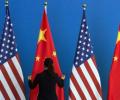
Throughout its standoff with India along the Line of Actual Control (LAC), Chinese officials sought to downplay the severity of the crisis, emphasising Beijing's intent to preserve border stability and prevent the standoff from harming other areas of its bilateral relationship with India, the Pentagon said in a report on Tuesday.
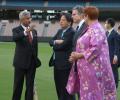
Yes, we (Quad) had a discussion on India-China relations because it was part of how we briefed each other about what was happening in our neighbourhood, Jaishankar said.
"On the border issue, China always maintains that we should follow through on treaties and agreements we signed and we jointly uphold peace and tranquility at the border region," Foreign Ministry spokesman Wang Wenbin said while responding to Jaishankar's remarks.
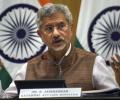
"What just happened is that we have agreed on the need to disengage because the troops on both sides are deployed very close to each other. "So there is a disengagement and de-escalation process which has been agreed upon," he said during an video interactive session at the India Global Week.

Qin, who is visiting New Delhi to attend the G20 Foreign Ministers meeting on Thursday, is expected to meet Jaishankar on its sidelines though the foreign ministry here is tight-lipped about it.
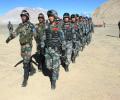
Esper also highlighted the 'increased' military cooperation with India and called it as 'one of the most important defence relationships of the 21th century'.

Gen Rawat carried out an aerial recce of certain areas and was briefed about key aspects of the security matrix in the region by senior military commanders.

The humanitarian gesture by the army came when it is dealing with an aggressive behaviour by the Chinese troops in eastern Ladakh.
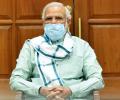
The world has seen India's strength and commitment to protecting its borders and sovereignty, he said and paid rich tributes to the 20 soldiers who were killed during a violent clash with Chinese troops.

It seems that the People's Liberation Army (PLA) is not in a mood to de-escalate the situation on the Line of Actual Control (LAC) as it has continued deployment of around 40,000 troops in its front and depth areas for the Eastern Ladakh sector.
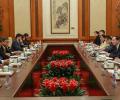
In the talks, China emphasised that the two sides should proceed from the fundamental interests of China, India and adhere to the strategic height and long-term perspective of China-India relations, the readout said.
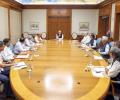
Terrorism and insurgency in J&K had subsided when India demolished East Pakistan -- for the simple reason that Pakistan understands power. We need to follow Chanakya's dictum of Saam, Daam, Dand, Bhed for strategising against Pakistan, asserts Lieutenant General Prakash Katoch (Retd). The ground truth is that unless we are prepared to acknowledge our shortcomings, including massive intelligence failures, punish those responsible and take corrective actions, we will continue in the same vein, asserts Lieutenant General Prakash Katoch (Retd).

The agenda of the talks will be to firm up a roadmap for disengagement of troops from all the friction points in eastern Ladakh, the sources said.

Asked about the recent meeting between Modi and Xi, and if Russia had any role in it, Alipov said, "We have not played any role in it, but we are happy that it took place in Kazan... We wholeheartedly welcome the meeting."
The document, which was uploaded on the defence ministry's website, was removed on Thursday morning following publication of a media report based on it.
